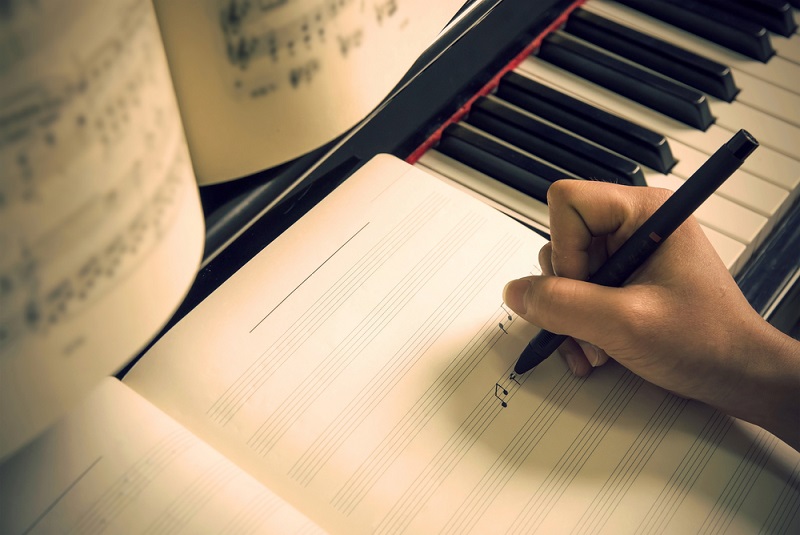
 Sheet Music Giant is a site for those who wants to access popular sheet music easily,
letting them download the sheet music for free for trial purposes.
It's completely free to download and try the listed sheet music, but you have to delete the files after 24 hours of trial.
Don't forget, if you like the piece of music you have just learned playing,
treat the artist with respect, and go buy the original sheet music.
Sheet Music Giant is a site for those who wants to access popular sheet music easily,
letting them download the sheet music for free for trial purposes.
It's completely free to download and try the listed sheet music, but you have to delete the files after 24 hours of trial.
Don't forget, if you like the piece of music you have just learned playing,
treat the artist with respect, and go buy the original sheet music.
Latest Sheet Music
R.E.M.
R.E.M. is an American rock band formed in Athens, Georgia, in 1980 by Michael Stipe (lead vocals), Peter Buck (guitar), Mike Mills (bass guitar), and Bill Berry (drums and percussion). R.E.M. was one of the first popular alternative rock bands, and gained early attention due to Buck's ringing, arpeggiated guitar style and Stipe's unclear vocals. R.E.M. released its first single, "Radio Free Europe", in 1981 on the independent record label Hib-Tone. The single was followed by the Chronic Town EP in 1982, the band's first release on I.R.S. Records. In 1983, the band released its critically acclaimed debut album Murmur, and built its reputation over the next few years through subsequent releases, constant touring, and the support of college radio. Following years of underground success, R.E.M. achieved a mainstream hit in 1987 with the single "The One I Love". The group signed to Warner Bros. Records in 1988, and began to espouse political and environmental concerns while playing large arenas worldwide.
By the early 1990s, when alternative rock began to experience broad mainstream success, R.E.M. was viewed as a pioneer of the genre and released its two most commercially successful albums, Out of Time (1991) and Automatic for the People (1992), which veered from the band's established sound. R.E.M.'s 1994 release Monster was a return to a more rock-oriented sound. The band began its first tour in six years to support the album; the tour was marred by medical emergencies suffered by three band members. In 1996, R.E.M. re-signed with Warner Bros. for a reported US$80 million, at the time the most expensive recording contract in history. The following year, Bill Berry left the band amicably, with Buck, Mills, and Stipe continuing as a three-piece. Through some changes in musical style, the band continued its career into the next decade with mixed critical and commercial success. In 2007, the band was inducted into the Rock and Roll Hall of Fame.
By the early 1990s, when alternative rock began to experience broad mainstream success, R.E.M. was viewed as a pioneer of the genre and released its two most commercially successful albums, Out of Time (1991) and Automatic for the People (1992), which veered from the band's established sound. R.E.M.'s 1994 release Monster was a return to a more rock-oriented sound. The band began its first tour in six years to support the album; the tour was marred by medical emergencies suffered by three band members. In 1996, R.E.M. re-signed with Warner Bros. for a reported US$80 million, at the time the most expensive recording contract in history. The following year, Bill Berry left the band amicably, with Buck, Mills, and Stipe continuing as a three-piece. Through some changes in musical style, the band continued its career into the next decade with mixed critical and commercial success. In 2007, the band was inducted into the Rock and Roll Hall of Fame.
Glee
Glee is a musical comedy-drama television series that airs on Fox in the United States. It focuses on the high school glee club New Directions competing on the show choir competition circuit, while its members deal with relationships, sexuality and social issues. The initial main cast encompassed club director and Spanish teacher Will Schuester (Matthew Morrison), cheerleading coach Sue Sylvester (Jane Lynch), guidance counselor Emma Pillsbury (Jayma Mays), Will's wife Terri (Jessalyn Gilsig), and eight club members played by Dianna Agron, Chris Colfer, Kevin McHale, Lea Michele, Cory Monteith, Amber Riley, Mark Salling and Jenna Ushkowitz. For the second season, formerly recurring cast members Mike O'Malley, Heather Morris and Naya Rivera were promoted to the main cast.
The series was created by Ryan Murphy, Brad Falchuk and Ian Brennan, who first conceived Glee as a film. The pilot episode was broadcast on May 19, 2009, and the first season aired from September 9, 2009 to June 8, 2010. The second season began airing on September 21, 2010, and a third season has been commissioned. Glee features on-screen performance-based musical numbers that are selected by Murphy, who aims to maintain a balance between show tunes and chart hits. Songs covered in the show are released through the iTunes Store during the week of broadcast, and a series of Glee albums have been released by Columbia Records. The music of Glee has been a commercial success, with over thirteen million digital single sales and five million album sales. The series' merchandise also includes DVD and Blu-Ray releases, a young adult book series, an iPad application, and a karaoke game for the Wii.
During its first season, Glee received generally favorable reviews from critics, with Metacritic's weighted average based on the impression of 18 critical reviews of 77 percent. The season was nominated for nineteen Emmy Awards, four Golden Globe Awards, six Satellite Awards and fifty-seven other awards, with wins including the 2010 Golden Globe Award for Best Television Series—Musical or Comedy, and Emmy awards for Lynch, guest-star Neil Patrick Harris and Murphy's direction of the pilot episode. The second season has currently been nominated for five Golden Globes including Best Television Series in a Comedy and as well as nominations for Matthew Morrison, Jane Lynch, Lea Michele and Chris Colfer.
The series was created by Ryan Murphy, Brad Falchuk and Ian Brennan, who first conceived Glee as a film. The pilot episode was broadcast on May 19, 2009, and the first season aired from September 9, 2009 to June 8, 2010. The second season began airing on September 21, 2010, and a third season has been commissioned. Glee features on-screen performance-based musical numbers that are selected by Murphy, who aims to maintain a balance between show tunes and chart hits. Songs covered in the show are released through the iTunes Store during the week of broadcast, and a series of Glee albums have been released by Columbia Records. The music of Glee has been a commercial success, with over thirteen million digital single sales and five million album sales. The series' merchandise also includes DVD and Blu-Ray releases, a young adult book series, an iPad application, and a karaoke game for the Wii.
During its first season, Glee received generally favorable reviews from critics, with Metacritic's weighted average based on the impression of 18 critical reviews of 77 percent. The season was nominated for nineteen Emmy Awards, four Golden Globe Awards, six Satellite Awards and fifty-seven other awards, with wins including the 2010 Golden Globe Award for Best Television Series—Musical or Comedy, and Emmy awards for Lynch, guest-star Neil Patrick Harris and Murphy's direction of the pilot episode. The second season has currently been nominated for five Golden Globes including Best Television Series in a Comedy and as well as nominations for Matthew Morrison, Jane Lynch, Lea Michele and Chris Colfer.
The Police
The Police were a three-piece rock band consisting of Sting (vocals, bass guitar), Andy Summers (guitar, vocals) and Stewart Copeland (drums, percussion, vocals). The band became globally popular in the early 1980s, playing a style of rock that was influenced by jazz, punk and reggae music. Their 1983 album, Synchronicity, was number one in the UK and the US and sold over 8,000,000 copies in the US. The band broke up in 1984, but reunited in early 2007 for a one-off world tour lasting until August 2008, in celebration of the 30th anniversary of their hit single "Roxanne" and also, to a lesser extent, that of their formation as a group. To date, The Police have sold more than 50 million albums worldwide. Rolling Stone ranked The Police number 70 on their list of the 100 Greatest Artists of All Time.
Astor Piazzolla
Ástor Pantaleón Piazzolla (March 11, 1921 – July 4, 1992) was an Argentine tango composer and bandoneón player. His oeuvre revolutionized the traditional tango into a new style termed nuevo tango, incorporating elements from jazz and classical music. An excellent bandoneonist, he regularly performed his own compositions with different ensembles.
Piazzolla's nuevo tango was distinct from the traditional tango in its incorporation of elements of jazz, its use of extended harmonies and dissonance, its use of counterpoint, and its ventures into extended compositional forms. As Argentine psychoanalyst Carlos Kuri has pointed out, Piazzolla's fusion of tango with this wide range of other recognizable Western musical elements was so successful that it produced a new individual style transcending these influences. It is precisely this success, and individuality, that makes it hard to pin down where particular influences reside in his compositions, but some aspects are clear. The use of the passacaglia technique of a circulating bass line and harmonic sequence, invented and much used in 17th and 18th century baroque music but also central to the idea of jazz "changes", predominates in most of Piazzolla's mature compositions. Another clear reference to the baroque is the often complex and virtuosic counterpoint that sometimes follows strict fugal behavior but more often simply allows each performer in the group to assert his voice. A further technique that emphasises this sense of democracy and freedom among the musicians is improvisation that is borrowed from jazz in concept, but in practice involves a different vocabulary of scales and rhythms that stay within the parameters of the established tango sound-world. Pablo Ziegler has been particularly responsible for developing this aspect of the style both within Piazzolla's groups and since the composer's death.
Piazzolla's nuevo tango was distinct from the traditional tango in its incorporation of elements of jazz, its use of extended harmonies and dissonance, its use of counterpoint, and its ventures into extended compositional forms. As Argentine psychoanalyst Carlos Kuri has pointed out, Piazzolla's fusion of tango with this wide range of other recognizable Western musical elements was so successful that it produced a new individual style transcending these influences. It is precisely this success, and individuality, that makes it hard to pin down where particular influences reside in his compositions, but some aspects are clear. The use of the passacaglia technique of a circulating bass line and harmonic sequence, invented and much used in 17th and 18th century baroque music but also central to the idea of jazz "changes", predominates in most of Piazzolla's mature compositions. Another clear reference to the baroque is the often complex and virtuosic counterpoint that sometimes follows strict fugal behavior but more often simply allows each performer in the group to assert his voice. A further technique that emphasises this sense of democracy and freedom among the musicians is improvisation that is borrowed from jazz in concept, but in practice involves a different vocabulary of scales and rhythms that stay within the parameters of the established tango sound-world. Pablo Ziegler has been particularly responsible for developing this aspect of the style both within Piazzolla's groups and since the composer's death.
Hans Zimmer
Hans Florian Zimmer (born September 12, 1957) is a German film score composer and music producer. He has composed music for over 100 films, including Hollywood blockbusters such as the Pirates of the Caribbean series, Gladiator, The Lion King, The Da Vinci Code and The Dark Knight.
Zimmer spent the early part of his career in the United Kingdom before moving to the United States. He is the head of the film music division at DreamWorks studios, and works with other composers through the company which he founded, Remote Control Productions. His work is notable for integrating electronic music sounds with traditional orchestral arrangements.
Zimmer spent the early part of his career in the United Kingdom before moving to the United States. He is the head of the film music division at DreamWorks studios, and works with other composers through the company which he founded, Remote Control Productions. His work is notable for integrating electronic music sounds with traditional orchestral arrangements.
Wicked
Wicked is a musical with songs and lyrics by Stephen Schwartz and a book by Winnie Holzman. The story is based on the best-selling novel Wicked: The Life and Times of the Wicked Witch of the West by Gregory Maguire, a parallel novel of L. Frank Baum's classic story The Wonderful Wizard of Oz from the perspective of the witches of the Land of Oz.
Wicked tells the story of Elphaba, the future Wicked Witch of the West and her relationship with Glinda, the Good Witch of the North. Their friendship struggles through their opposing personalities and viewpoints, rivalry over the same love-interest, their reactions to the Wizard's corrupt government, and, ultimately, Elphaba's public fall from grace. The plot is set mostly before Dorothy's arrival from Kansas, and includes several references to well-known scenes and dialogue in the 1939 film The Wizard of Oz.
The musical debuted on Broadway on October 30, 2003. It is produced by Universal Pictures and directed by Joe Mantello, with musical staging by Wayne Cilento. Its original stars were Idina Menzel as Elphaba, Kristin Chenoweth as Glinda, and Joel Grey as the Wizard. Although the production received mixed reviews and was panned by The New York Times, it has proved to be a favorite among patrons. The Broadway production's success spawned productions in Chicago, Los Angeles, London's West End, Tokyo, Melbourne, and Stuttgart, along with two North American tours that have visited over 30 cities in Canada and the United States.
The score of Wicked is heavily thematic, bearing in some senses more resemblance to a film score than a musical's score. While many musicals' scores develop new motifs and melodies for each song with little overlap, Schwartz integrated a handful of leitmotifs throughout the production. A cast recording of the original Broadway production was released on December 16, 2003, by Universal Music. All of the songs featured on stage are present on the recording with the exception of "The Wizard And I (Reprise)" and "The Wicked Witch of the East". The short reprise of "No One Mourns The Wicked" that opens Act II is attached to the beginning of "Thank Goodness". The music was arranged by Stephen Oremus, who was also the conductor and director, and James Lynn Abbott, with orchestrations by William David Brohn. The recording received the Grammy Award for Best Musical Show Album in 2005 and was certified platinum by the RIAA on November 30, 2006.
Wicked tells the story of Elphaba, the future Wicked Witch of the West and her relationship with Glinda, the Good Witch of the North. Their friendship struggles through their opposing personalities and viewpoints, rivalry over the same love-interest, their reactions to the Wizard's corrupt government, and, ultimately, Elphaba's public fall from grace. The plot is set mostly before Dorothy's arrival from Kansas, and includes several references to well-known scenes and dialogue in the 1939 film The Wizard of Oz.
The musical debuted on Broadway on October 30, 2003. It is produced by Universal Pictures and directed by Joe Mantello, with musical staging by Wayne Cilento. Its original stars were Idina Menzel as Elphaba, Kristin Chenoweth as Glinda, and Joel Grey as the Wizard. Although the production received mixed reviews and was panned by The New York Times, it has proved to be a favorite among patrons. The Broadway production's success spawned productions in Chicago, Los Angeles, London's West End, Tokyo, Melbourne, and Stuttgart, along with two North American tours that have visited over 30 cities in Canada and the United States.
The score of Wicked is heavily thematic, bearing in some senses more resemblance to a film score than a musical's score. While many musicals' scores develop new motifs and melodies for each song with little overlap, Schwartz integrated a handful of leitmotifs throughout the production. A cast recording of the original Broadway production was released on December 16, 2003, by Universal Music. All of the songs featured on stage are present on the recording with the exception of "The Wizard And I (Reprise)" and "The Wicked Witch of the East". The short reprise of "No One Mourns The Wicked" that opens Act II is attached to the beginning of "Thank Goodness". The music was arranged by Stephen Oremus, who was also the conductor and director, and James Lynn Abbott, with orchestrations by William David Brohn. The recording received the Grammy Award for Best Musical Show Album in 2005 and was certified platinum by the RIAA on November 30, 2006.
Traditional
Creedence Clearwater Revival
Creedence Clearwater Revival, also referred to as Creedence and CCR, was an American rock band that recorded and performed from 1959 to 1972 under various names before settling on the Creedence Clearwater Revival name in 1967. The band initially consisted of lead vocalist, lead guitarist, and primary songwriter John Fogerty; his brother, rhythm guitarist Tom Fogerty; bassist Stu Cook; and drummer Doug Clifford. These members had played together since 1959, first as the Blue Velvets and later as the Golliwogs.
Edvard Grieg
Edvard Hagerup Grieg (15 June 1843 – 4 September 1907) was a Norwegian composer and pianist who composed in the Romantic period. He is best known for his Piano Concerto in A minor, for his incidental music to Henrik Ibsen's play Peer Gynt (which includes Morning Mood and In the Hall of the Mountain King), and for his collection of piano miniatures Lyric Pieces. "Edvard" is sometimes mispelt as "Edward".
Grieg is renowned as a nationalist composer, drawing inspiration from Norwegian folk music. Early works include a symphony (which he later suppressed) and a piano sonata. He also wrote three sonatas for violin and piano and a cello sonata. His many short pieces for piano — often based on Norwegian folk tunes and dances — led some to call him the "Chopin of the North".
Concerto in A minor: 1. Allegro molto moderato
Performed by the University of Washington Symphony, conducted by Peter Erős (Neal O'Doan, piano)
Concerto in A minor: 1. Allegro molto moderato
Performed by the Skidmore College Orchestra (courtesy of Musopen)
Concerto in A minor: 2. Adagio
Performed by the University of Washington Symphony, conducted by Peter Erős (Neal O'Doan, piano)
Concerto in A minor: 2. Adagio
Performed by the Skidmore College Orchestra (courtesy of Musopen)
Concerto in A minor: 3. Allegro moderato molto e marcato
Performed by the University of Washington Symphony, conducted by Peter Erős (Neal O'Doan, piano)
Concerto in A minor: 3. Allegro moderato molto e marcato
Performed by the Skidmore College Orchestra (courtesy of Musopen)
Notturno, Op. 54, No. 4
Performed live by Mark Gasser
Problems listening to these files? See media help.
The Piano Concerto is his most popular work. Its champions have included the pianist and composer Percy Grainger, a personal friend of Grieg who played the concerto frequently during his long career. An arrangement of part of the work made an iconic television comedy appearance in the 1971 Morecambe and Wise Show, conducted by André Previn.
Some of the Lyric Pieces (for piano) are also well-known, as is the incidental music to Henrik Ibsen's play Peer Gynt, a play that Grieg found to be an arduous work to score properly. In a 1874 letter to his friend Frants Beyer, Grieg expressed his unhappiness with what is now considered one of his most popular compositions from Peer Gynt, In the Hall of the Mountain King: "I have also written something for the scene in the hall of the mountain King - something that I literally can't bear listening to because it absolutely reeks of cow-pies, exaggerated Norwegian nationalism, and trollish self-satisfaction! But I have a hunch that the irony will be discernible."
Grieg is renowned as a nationalist composer, drawing inspiration from Norwegian folk music. Early works include a symphony (which he later suppressed) and a piano sonata. He also wrote three sonatas for violin and piano and a cello sonata. His many short pieces for piano — often based on Norwegian folk tunes and dances — led some to call him the "Chopin of the North".
Concerto in A minor: 1. Allegro molto moderato
Performed by the University of Washington Symphony, conducted by Peter Erős (Neal O'Doan, piano)
Concerto in A minor: 1. Allegro molto moderato
Performed by the Skidmore College Orchestra (courtesy of Musopen)
Concerto in A minor: 2. Adagio
Performed by the University of Washington Symphony, conducted by Peter Erős (Neal O'Doan, piano)
Concerto in A minor: 2. Adagio
Performed by the Skidmore College Orchestra (courtesy of Musopen)
Concerto in A minor: 3. Allegro moderato molto e marcato
Performed by the University of Washington Symphony, conducted by Peter Erős (Neal O'Doan, piano)
Concerto in A minor: 3. Allegro moderato molto e marcato
Performed by the Skidmore College Orchestra (courtesy of Musopen)
Notturno, Op. 54, No. 4
Performed live by Mark Gasser
Problems listening to these files? See media help.
The Piano Concerto is his most popular work. Its champions have included the pianist and composer Percy Grainger, a personal friend of Grieg who played the concerto frequently during his long career. An arrangement of part of the work made an iconic television comedy appearance in the 1971 Morecambe and Wise Show, conducted by André Previn.
Some of the Lyric Pieces (for piano) are also well-known, as is the incidental music to Henrik Ibsen's play Peer Gynt, a play that Grieg found to be an arduous work to score properly. In a 1874 letter to his friend Frants Beyer, Grieg expressed his unhappiness with what is now considered one of his most popular compositions from Peer Gynt, In the Hall of the Mountain King: "I have also written something for the scene in the hall of the mountain King - something that I literally can't bear listening to because it absolutely reeks of cow-pies, exaggerated Norwegian nationalism, and trollish self-satisfaction! But I have a hunch that the irony will be discernible."
ANGEL MAHLER
Ángel Mahler was born in 1960 in the city of Buenos Aires. He has studied piano and composition with Evi Swillinger, Edda María Sangrigoli and Manuel Juarez.He soon starts to compose and conduct, becoming one of the most well known argentine composers.
Elvis Presley
Elvis Aaron Presley (January 8, 1935–August 16, 1977, middle name sometimes written Aron)a was an American singer, musician and actor. A cultural icon, he is commonly referred to as the "The King of Rock 'n' Roll" or "The King".
In 1954, Presley began his career as the first performer of rockabilly, an uptempo fusion of country and rhythm and blues with a strong back beat. His novel versions of existing songs, mixing "black" and "white" sounds, made him popular—and controversial—as did his uninhibited stage and television performances. He recorded songs in the rock and roll genre, with tracks like "Hound Dog" and "Jailhouse Rock" later embodying the style. Presley had a versatile voice and had unusually wide success encompassing other genres, including gospel, blues, ballads and pop. To date, he has been inducted into four music halls of fame.
In the 1960s, Presley made the majority of his thirty-one movies—mainly poorly reviewed, but financially successful, musicals. In 1968, he returned with acclaim to live music in a television special, and thereafter performed across the U.S., notably in Las Vegas. Throughout his career, he set records for concert attendance, television ratings and recordings sales. He is one of the best-selling and most influential artists in the history of popular music. Health problems, drug dependency and other factors led to his premature death at age 42.
In 1954, Presley began his career as the first performer of rockabilly, an uptempo fusion of country and rhythm and blues with a strong back beat. His novel versions of existing songs, mixing "black" and "white" sounds, made him popular—and controversial—as did his uninhibited stage and television performances. He recorded songs in the rock and roll genre, with tracks like "Hound Dog" and "Jailhouse Rock" later embodying the style. Presley had a versatile voice and had unusually wide success encompassing other genres, including gospel, blues, ballads and pop. To date, he has been inducted into four music halls of fame.
In the 1960s, Presley made the majority of his thirty-one movies—mainly poorly reviewed, but financially successful, musicals. In 1968, he returned with acclaim to live music in a television special, and thereafter performed across the U.S., notably in Las Vegas. Throughout his career, he set records for concert attendance, television ratings and recordings sales. He is one of the best-selling and most influential artists in the history of popular music. Health problems, drug dependency and other factors led to his premature death at age 42.
3 Doors Down
3 Doors Down is an American rock band formed in 1994 in Escatawpa, Mississippi by Brad Arnold (vocals and drums), Matt Roberts (guitar) and Todd Harrell (bass). The band signed to Universal Records after the success of their song "Kryptonite". The band has since sold well over 15 million albums worldwide since their debut album, The Better Life, which was released in 2000. They also perform more than 300 concerts a year and have shared the stage with other artists such as Tantric, Lynyrd Skynyrd, Staind, Nickelback, Alter Bridge, Breaking Benjamin, Econoline Crush, Hinder, Seether, Shinedown, Finger Eleven, and Daughtry. Hit song It's Not My Time is featured in the video game NHL 09.
Switchfoot
Switchfoot is an American alternative rock band from San Diego, California. The band's members are Jon Foreman (vocals, guitar), Tim Foreman (bass guitar, backing vocals), Chad Butler (drums, percussion), Jerome Fontamillas (guitar, keyboards, backing vocals), and Drew Shirley (guitar). Known for their energetic live shows, the three guitarists in the line-up often operate simultaneously, building on the pop sensibilities of Jon's songwriting, and, rounded out by Jerome's work on the synthesizer, bringing his industrial roots to the sound, the band works up "the Switchfoot sound"– a melodic crunch of densely layered sound featuring some electronic experimentation, and often driven by hard-charging guitar riffs, while throwing in a few softer, spacey ballads as well.
Switchfoot first gained mainstream recognition after the inclusion of four of their songs in the 2002 movie A Walk to Remember. This recognition led to their major label debut, The Beautiful Letdown, which was released in 2003. It went on to sell over 2.6 million copies and produced the band's best-known singles, "Meant to Live" and "Dare You to Move".
According to Jon Foreman, the name "Switchfoot" is a surfing term. "We all love to surf and have been surfing all our lives so to us, the name made sense. To switch your feet means to take a new stance facing the opposite direction. It's about change and movement, a different way of approaching life and music".
Switchfoot first gained mainstream recognition after the inclusion of four of their songs in the 2002 movie A Walk to Remember. This recognition led to their major label debut, The Beautiful Letdown, which was released in 2003. It went on to sell over 2.6 million copies and produced the band's best-known singles, "Meant to Live" and "Dare You to Move".
According to Jon Foreman, the name "Switchfoot" is a surfing term. "We all love to surf and have been surfing all our lives so to us, the name made sense. To switch your feet means to take a new stance facing the opposite direction. It's about change and movement, a different way of approaching life and music".
Lady Gaga
Lady Gaga (born Stefani Joanne Angelina Germanotta on March 28, 1986) is an American recording artist. She began performing in the rock music scene of New York City's Lower East Side. She soon signed with Streamline Records, an imprint of Interscope Records, upon its establishment in 2007. During her early time at Interscope, she worked as a songwriter for fellow label artists and captured the attention of Akon, who recognized her vocal abilities, and had her also sign to his own label, Kon Live Distribution.
Her debut album, The Fame, was released on August 19, 2008. In addition to receiving generally positive reviews, it reached number-one in Canada, Austria, Germany, and Ireland and topped the Billboard Top Electronic Albums chart. Its first two singles, "Just Dance" and "Poker Face", co-written and co-produced with RedOne, became international number-one hits, topping the Hot 100 in the United States as well as other countries. The album later earned a total of six Grammy Award nominations and won awards for Best Electronic/Dance Album and Best Dance Recording. In early 2009, after having opened for New Kids on the Block and the Pussycat Dolls, she embarked on her first headlining tour, The Fame Ball Tour. By the fourth quarter of 2009, she released her second studio album The Fame Monster, with the global chart-topping lead single "Bad Romance", as well as having embarked on her second headlining tour of the year, The Monster Ball Tour.
Lady Gaga is inspired by glam rock musicians such as David Bowie and Freddie Mercury, as well as pop music artists such as Madonna and Michael Jackson. She has also stated fashion is a source of inspiration for her songwriting and performances. To date, she has sold over eight million albums and over thirty-five million singles worldwide.
Her debut album, The Fame, was released on August 19, 2008. In addition to receiving generally positive reviews, it reached number-one in Canada, Austria, Germany, and Ireland and topped the Billboard Top Electronic Albums chart. Its first two singles, "Just Dance" and "Poker Face", co-written and co-produced with RedOne, became international number-one hits, topping the Hot 100 in the United States as well as other countries. The album later earned a total of six Grammy Award nominations and won awards for Best Electronic/Dance Album and Best Dance Recording. In early 2009, after having opened for New Kids on the Block and the Pussycat Dolls, she embarked on her first headlining tour, The Fame Ball Tour. By the fourth quarter of 2009, she released her second studio album The Fame Monster, with the global chart-topping lead single "Bad Romance", as well as having embarked on her second headlining tour of the year, The Monster Ball Tour.
Lady Gaga is inspired by glam rock musicians such as David Bowie and Freddie Mercury, as well as pop music artists such as Madonna and Michael Jackson. She has also stated fashion is a source of inspiration for her songwriting and performances. To date, she has sold over eight million albums and over thirty-five million singles worldwide.
Walter Murphy
Walter Anthony Murphy, Jr. is an American composer, arranger, pianist, musician, songwriter and music producer.
Date of birth: December 19, 1952 (66 years old), New York, New York, United States TV Shows: Family Guy Presents: Seth & Alex's Almost Live Comedy Show Albums: Discosymphony, Family Guy: Live in Vegas,
Date of birth: December 19, 1952 (66 years old), New York, New York, United States TV Shows: Family Guy Presents: Seth & Alex's Almost Live Comedy Show Albums: Discosymphony, Family Guy: Live in Vegas,
Giuseppe Donizetti
Giuseppe Donizetti. Italian musician. Turkey in the 19th century who introduced the first in Turkey and western music band which Mûsikâ-i Humayun's development is the person who provided the largest contribution
Jelly Roll Morton
Ferdinand "Jelly Roll" Morton (1880s – July 10, 1941) was an American ragtime and early jazz pianist, bandleader and composer.
Widely recognized as a pivotal figure in early jazz, Morton claimed, in self-promotional hyperbole, to have invented jazz outright in 1902. Morton was the first serious composer of jazz, naming and popularizing the "Spanish tinge" of exotic rhythms and penning such standards as "Wolverine Blues", "Black Bottom Stomp", and "Buddy Bolden's Blues".
Widely recognized as a pivotal figure in early jazz, Morton claimed, in self-promotional hyperbole, to have invented jazz outright in 1902. Morton was the first serious composer of jazz, naming and popularizing the "Spanish tinge" of exotic rhythms and penning such standards as "Wolverine Blues", "Black Bottom Stomp", and "Buddy Bolden's Blues".
Yuka Tsujiyoko
Yuka Tsujiyoko (辻横 由佳 Tsujiyoko Yuka) is a Japanese video game music composer. She is best known for her contributions to the Fire Emblem and Paper Mario series, and several other Intelligent Systems developed games. She also scored the Super Scope games Battle Clash, and its sequel Metal Combat: Falcon's Revenge.
Bartolomeo Campagnoli
Bartolomeo Campagnoli (September 10, 1751 – November 6, 1827) was an Italian violinist and composer.Campagnoli was a virtuoso violinist who toured Europe propagating the 18th Century Italian violin style. He also has a number of compositions to his name, notably.Bartolomeo was born in Cento, where his father was a trader. He studied the violin locally, firstly in Bologna, and then from 1763 in Modena with Paul Guastarobba, who had studied with the noted violinist Giuseppe Tartini. He returned home in 1766 and played in a local orchestra. In 1768 he studied further in Venice and Padua, where Tartini still lived.
Anton Webern
Anton Webern (3 December 1883 – 15 September 1945) was an Austrian composer and conductor. He was a member of the Second Viennese School. As a student and significant follower of Arnold Schoenberg, he became one of the best-known exponents of the twelve-tone technique; in addition, his innovations regarding schematic organization of pitch, rhythm and dynamics were formative in the musical technique later known as total serialism.
J. S. Bach
Johann Sebastian Bach (21 March 1685, O.S.31 March 1685, N.S. – 28 July 1750, N.S.) was a German composer, organist, harpsichordist, violist, and violinist whose sacred and secular works for choir, orchestra, and solo instruments drew together the strands of the Baroque period and brought it to its ultimate maturity. Although he did not introduce new forms, he enriched the prevailing German style with a robust contrapuntal technique, an unrivalled control of harmonic and motivic organisation, and the adaptation of rhythms, forms and textures from abroad, particularly from Italy and France.
Revered for their intellectual depth, technical command and artistic beauty, Bach's works include the Brandenburg Concertos, the Goldberg Variations, the Partitas, The Well-Tempered Clavier, the Mass in B minor, the St Matthew Passion, the St John Passion, the Magnificat, A Musical Offering, The Art of Fugue, the English and French Suites, the Sonatas and Partitas for solo violin, the Cello Suites, more than 200 surviving cantatas, and a similar number of organ works, including the famous Toccata and Fugue in D minor and Passacaglia and Fugue in C minor, as well as the Great Eighteen Chorale Preludes and Organ Mass.
Bach's abilities as an organist were highly respected throughout Europe during his lifetime, although he was not widely recognised as a great composer until a revival of interest and performances of his music in the first half of the 19th century. He is now generally regarded as one of the main composers of the Baroque style, and as one of the greatest composers of all time.
Revered for their intellectual depth, technical command and artistic beauty, Bach's works include the Brandenburg Concertos, the Goldberg Variations, the Partitas, The Well-Tempered Clavier, the Mass in B minor, the St Matthew Passion, the St John Passion, the Magnificat, A Musical Offering, The Art of Fugue, the English and French Suites, the Sonatas and Partitas for solo violin, the Cello Suites, more than 200 surviving cantatas, and a similar number of organ works, including the famous Toccata and Fugue in D minor and Passacaglia and Fugue in C minor, as well as the Great Eighteen Chorale Preludes and Organ Mass.
Bach's abilities as an organist were highly respected throughout Europe during his lifetime, although he was not widely recognised as a great composer until a revival of interest and performances of his music in the first half of the 19th century. He is now generally regarded as one of the main composers of the Baroque style, and as one of the greatest composers of all time.
Mussorgsky
Modest Petrovich Mussorgsky (March 21, 1839 – March 28, 1881), one of the Russian composers known as the Five, was an innovator of Russian music. He strove to achieve a uniquely Russian musical identity, often in deliberate defiance of the established conventions of Western music.
Like his literary contemporary Fyodor Dostoyevsky, Mussorgsky depicts in his music "the insulted and the injured" with all their passion and pain. He raises these characters to tragic heights until the grotesque and majestic coexist. Mussorgsky could accomplish this not simply out of compassion or guilt towards them, but because in his works he almost becomes them. Mussorgsky's music is vivid, confused, feverish and ultimately hypnotizing —again, like Dostoyevsky at his best.
Many of his major works were inspired by Russian history, Russian folklore, and other nationalist themes, including the opera Boris Godunov, the orchestral tone poem Night on Bald Mountain, and the piano suite Pictures at an Exhibition. However, while Mussorgsky's music can be vivid and nationalistic, it does not glorify the powerful and is at times (such as in The Field-Marshal) antimilitaristic. For this reason, it was perceived as being directed against the state and its composer "under suspicion." He, like the others in The Russian Five, were considered dangerous extremists by the emperor and his court. This may have been the reason Tsar Alexander III personally crossed off Boris Godounov from the list of proposed pieces for the imperial opera in 1888.
For many years Mussorgsky's works were mainly known in versions revised or completed by other composers. Many of his most important compositions have recently come into their own in their original forms, and some of the original scores are now also available.
Like his literary contemporary Fyodor Dostoyevsky, Mussorgsky depicts in his music "the insulted and the injured" with all their passion and pain. He raises these characters to tragic heights until the grotesque and majestic coexist. Mussorgsky could accomplish this not simply out of compassion or guilt towards them, but because in his works he almost becomes them. Mussorgsky's music is vivid, confused, feverish and ultimately hypnotizing —again, like Dostoyevsky at his best.
Many of his major works were inspired by Russian history, Russian folklore, and other nationalist themes, including the opera Boris Godunov, the orchestral tone poem Night on Bald Mountain, and the piano suite Pictures at an Exhibition. However, while Mussorgsky's music can be vivid and nationalistic, it does not glorify the powerful and is at times (such as in The Field-Marshal) antimilitaristic. For this reason, it was perceived as being directed against the state and its composer "under suspicion." He, like the others in The Russian Five, were considered dangerous extremists by the emperor and his court. This may have been the reason Tsar Alexander III personally crossed off Boris Godounov from the list of proposed pieces for the imperial opera in 1888.
For many years Mussorgsky's works were mainly known in versions revised or completed by other composers. Many of his most important compositions have recently come into their own in their original forms, and some of the original scores are now also available.
Murray Gold
Murray Jonathan Gold (born 28 February 1969) is an English composer for stage, film, and television and a dramatist for both theatre and radio. He is best known as the musical director and composer of the music for Doctor Who from 2005, until he stepped down in 2018 after the tenth series aired in 2017. He has been nominated for five BAFTAs.Born in Portsmouth to a Jewish family, Gold initially pursued drama as a vocation, writing and playing music as a hobby, but switched to music when he became musical director for the University of Cambridge's Footlights society.
Giulio Caccini
Giulio Romolo Caccini (also Giulio Romano) (Rome, 8 October 1551 – Florence, buried 10 December 1618) was an Italian composer, teacher, singer, instrumentalist and writer of the late Renaissance and early Baroque eras. He was one of the founders of the genre of opera, and one of the most influential creators of the new Baroque style. He was also the father of the composer Francesca Caccini and the singer Settimia Caccini.
Friedrich Dotzauer
Justus Johann Friedrich Dotzauer was a German cellist and composer
Andres Barrios
Andres Barrios Musical artist Songs Isbilya Al Sur del Jazz · 2019 EstreJazz Fugaz Al Sur del Jazz · 2019 Bulerías
Cante de las Minas. La Unión 201
Cante de las Minas. La Unión 201
Cole Robinson
For years, people have called me looking for high-energy groove band that could fit in their living room or the corner of a small club and play for 3 hours. This need and my love for the legacy of the Hammond Organ Trio and musicians such as Jack McDuff, Dr. Lonnie Smith, and Soulive inspired me to form a Hammond organ trio. This format of guitar, organ, and drums excites me with both its lushness and it’s limitations. Much like the succinct form of haiku encourages you to express yourself in unconventional ways, the organ trio similarly inspires fresh musical ideas. We do, however, defy the tradition by using psychedelic effects and Moog synthesizer. We also perform our own compositions alongside the established soul jazz repertoire. The sound of the band is old and new, big and small, jazz and rock.
Doug McKenzie
He is a teacher having taught in a jazz studies course at a tertiary college in Geelong Australia.
Carl Orff
Carl Orff (July 10, 1895 – March 29, 1982) was a 20th-century German composer, best known for his cantata Carmina Burana (1937). In addition to his career as a composer, Orff developed an influential method of music education for children.
Orff is most known for Carmina Burana (1937), a "scenic cantata". It is the first of a trilogy that also includes Catulli Carmina and Trionfo di Afrodite. Carmina Burana reflected his interest in medieval German poetry. Together the trilogy is called Trionfi, or "Triumphs". The composer described it as the celebration of the triumph of the human spirit through sexual and holistic balance. The work was based on thirteenth-century poetry found in a manuscript dubbed the Codex latinus monacensis found in the Benedictine monastery of Benediktbeuern in 1803 and written by the Goliards; this collection is also known as Carmina Burana. While "modern" in some of his compositional techniques, Orff was able to capture the spirit of the medieval period in this trilogy, with infectious rhythms and easy tonalities. The medieval poems, written in Latin and an early form of German, are often racy, but without descending into smut. "Fortuna Imperatrix Mundi", commonly known as "O Fortuna", from Carmina Burana is often used to denote primal forces, for example in the Oliver Stone movie The Doors.. The work's association with fascism also led Pier Paolo Pasolini to use the movement "Veris Leta Facies" to accompany the concluding scenes of torture and murder in his final film Salò, or the 120 Days of Sodom.
With the success of Carmina Burana, Orff disowned all of his previous works except for Catulli Carmina and the Entrata (an orchestration of "The Bells" by William Byrd (1539–1623)), which were rewritten until acceptable by Orff. As an historical aside, Carmina Burana is probably the most famous piece of music composed and premiered in Nazi Germany. Carmina Burana was in fact so popular that Orff received a commission in Frankfurt to compose incidental music for A Midsummer Night's Dream, which was supposed to replace the banned music by Mendelssohn. After the war, he claimed not to be satisfied with the music and reworked it into the final version that was first performed in 1964.
Orff is most known for Carmina Burana (1937), a "scenic cantata". It is the first of a trilogy that also includes Catulli Carmina and Trionfo di Afrodite. Carmina Burana reflected his interest in medieval German poetry. Together the trilogy is called Trionfi, or "Triumphs". The composer described it as the celebration of the triumph of the human spirit through sexual and holistic balance. The work was based on thirteenth-century poetry found in a manuscript dubbed the Codex latinus monacensis found in the Benedictine monastery of Benediktbeuern in 1803 and written by the Goliards; this collection is also known as Carmina Burana. While "modern" in some of his compositional techniques, Orff was able to capture the spirit of the medieval period in this trilogy, with infectious rhythms and easy tonalities. The medieval poems, written in Latin and an early form of German, are often racy, but without descending into smut. "Fortuna Imperatrix Mundi", commonly known as "O Fortuna", from Carmina Burana is often used to denote primal forces, for example in the Oliver Stone movie The Doors.. The work's association with fascism also led Pier Paolo Pasolini to use the movement "Veris Leta Facies" to accompany the concluding scenes of torture and murder in his final film Salò, or the 120 Days of Sodom.
With the success of Carmina Burana, Orff disowned all of his previous works except for Catulli Carmina and the Entrata (an orchestration of "The Bells" by William Byrd (1539–1623)), which were rewritten until acceptable by Orff. As an historical aside, Carmina Burana is probably the most famous piece of music composed and premiered in Nazi Germany. Carmina Burana was in fact so popular that Orff received a commission in Frankfurt to compose incidental music for A Midsummer Night's Dream, which was supposed to replace the banned music by Mendelssohn. After the war, he claimed not to be satisfied with the music and reworked it into the final version that was first performed in 1964.
Bach
Johann Sebastian Bach (31 March 1685 – 28 July 1750) was a German composer and organist whose sacred and secular works for choir, orchestra, and solo instruments drew together the strands of the Baroque period and brought it to its ultimate maturity. Although he introduced no new forms, he enriched the prevailing German style with a robust contrapuntal technique, an unrivalled control of harmonic and motivic organisation in composition for diverse musical forces, and the adaptation of rhythms and textures from abroad, particularly Italy and France.
Revered for their intellectual depth and technical and artistic beauty, Bach's works include the Brandenburg concertos; the Goldberg Variations; the English Suites, French Suites, Partitas, and Well-Tempered Clavier; the Mass in B Minor; the St. Matthew Passion; the St. John Passion; The Musical Offering; The Art of Fugue; the Sonatas and Partitas for violin solo; the Cello Suites; more than 200 surviving cantatas; and a similar number of organ works, including the celebrated Toccata and Fugue in D Minor.
While Bach's fame as an organist was great during his lifetime, he was not particularly well-known as a composer. His adherence to Baroque forms and contrapuntal style was considered "old-fashioned" by his contemporaries, especially late in his career when the musical fashion tended towards Rococo and later Classical styles. A revival of interest and performances of his music began early in the 19th century, and he is now widely considered to be one of the greatest composers in the Western tradition.
Revered for their intellectual depth and technical and artistic beauty, Bach's works include the Brandenburg concertos; the Goldberg Variations; the English Suites, French Suites, Partitas, and Well-Tempered Clavier; the Mass in B Minor; the St. Matthew Passion; the St. John Passion; The Musical Offering; The Art of Fugue; the Sonatas and Partitas for violin solo; the Cello Suites; more than 200 surviving cantatas; and a similar number of organ works, including the celebrated Toccata and Fugue in D Minor.
While Bach's fame as an organist was great during his lifetime, he was not particularly well-known as a composer. His adherence to Baroque forms and contrapuntal style was considered "old-fashioned" by his contemporaries, especially late in his career when the musical fashion tended towards Rococo and later Classical styles. A revival of interest and performances of his music began early in the 19th century, and he is now widely considered to be one of the greatest composers in the Western tradition.
Laurie London
Laurie London is an English singer, who achieved fame as a boy singer of the 1950s, for both his gospel and novelty songs recording in both English and German. He is best known for his hit single of the spiritual song "He's Got the Whole World in His Hands".
Howard Shore
Howard Leslie Shore (born October 18, 1946) is a Canadian composer, notable for his film scores. He has composed the scores for over 40 films, most notably the scores for The Lord of the Rings film trilogy, for which he won three Academy Awards. He is also a consistent collaborator with director David Cronenberg, having scored all but one of his films since 1979. Shore has also worked with Martin Scorsese, Jonathan Demme, David Fincher and many other filmakers.
He has also composed a few concert works including one opera, The Fly, based on the plot (though not his score) of Cronenberg's 1986 film premiered at the Théâtre du Châtelet in Paris on 2 July 2008., a short piece Fanfare for the Wanamaker Organ and the Philadelphia Orchestra, and a short overture for the Swiss 21st Century Symphony Orchestra.
Shore is a three-time winner of the Academy Award, and has also won two Golden Globe Awards and four Grammy Awards. He is the uncle of film composer Ryan Shore.
He has also composed a few concert works including one opera, The Fly, based on the plot (though not his score) of Cronenberg's 1986 film premiered at the Théâtre du Châtelet in Paris on 2 July 2008., a short piece Fanfare for the Wanamaker Organ and the Philadelphia Orchestra, and a short overture for the Swiss 21st Century Symphony Orchestra.
Shore is a three-time winner of the Academy Award, and has also won two Golden Globe Awards and four Grammy Awards. He is the uncle of film composer Ryan Shore.
Maksim Mrvica
Maksim Mrvica (Croatian pronunciation: ; born May 3, 1975) is a popular pianist from Croatia. In 2003, Maksim released one of his first albums, The Piano Player.
Maksim has music videos for The Gypsy Maid, New World Concerto, Somewhere In Time, Nostradamus; directed by Tony van den Ende, Kolibre; directed by Tony van den Ende, Exodus, Olympic Dream, The Flight of the Bumble Bee, Prelude in C, Anthem and Child in Paradise.
Maksim has music videos for The Gypsy Maid, New World Concerto, Somewhere In Time, Nostradamus; directed by Tony van den Ende, Kolibre; directed by Tony van den Ende, Exodus, Olympic Dream, The Flight of the Bumble Bee, Prelude in C, Anthem and Child in Paradise.
Maurice Jarre
Maurice-Alexis Jarre (French: ; 13 September 1924 – 28 March 2009) was a French composer and conductor, "one of the giants of 20th-century film music" who was "among the most sought-after composers in the movie industry" and "a creator of both subtle underscoring and grand, sweeping themes, not only writing for conventional orchestras... but also experimenting with electronic sounds later in his career". Although he composed several concert works, Jarre is best known for his film scores, particularly for his collaborations with film director David Lean. Jarre composed the scores to all of Lean's films from Lawrence of Arabia (1962) on. Notable scores for other directors include The Train (1964), Mohammad, Messenger of God (1976), Lion of the Desert (1981), Witness (1985) and Ghost (1990).
Kylie Minogue
Kylie Ann Minogue (born 28 May 1968), is an Australian pop singer-songwriter and occasional actress. She rose to prominence in the late 1980s through her role in the Australian television soap opera Neighbours, before commencing her career as a pop artist in 1987.
Signed to a contract by British songwriters and producers Stock, Aitken & Waterman in 1988, she achieved a string of hit records throughout the world. Her popularity waned during the early 1990s, leading her to part company from Stock, Aitken & Waterman in 1992. During the mid to late 90s, Minogue distanced herself from her earlier work and attempted to establish herself as a credible and independent performer and songwriter. Her projects were widely publicised, but her albums failed to attract a substantial audience and resulted in the lowest sales of her career at the time. She returned to popularity as a pop artist in 2000, and became well-known for her elaborate music videos and expensively mounted stage shows.
In Australia, Europe and Asia, Minogue has become one of her generation's most recognisable celebrities. In Australia, after being dismissed early in her career by some critics, she has been widely acclaimed for her many achievements. Minogue returned to performing and recording in the late 2000s after a period of convalescence, and was awarded with an OBE in 2008 for services to music. She has sold in excess of 60 million records.
Signed to a contract by British songwriters and producers Stock, Aitken & Waterman in 1988, she achieved a string of hit records throughout the world. Her popularity waned during the early 1990s, leading her to part company from Stock, Aitken & Waterman in 1992. During the mid to late 90s, Minogue distanced herself from her earlier work and attempted to establish herself as a credible and independent performer and songwriter. Her projects were widely publicised, but her albums failed to attract a substantial audience and resulted in the lowest sales of her career at the time. She returned to popularity as a pop artist in 2000, and became well-known for her elaborate music videos and expensively mounted stage shows.
In Australia, Europe and Asia, Minogue has become one of her generation's most recognisable celebrities. In Australia, after being dismissed early in her career by some critics, she has been widely acclaimed for her many achievements. Minogue returned to performing and recording in the late 2000s after a period of convalescence, and was awarded with an OBE in 2008 for services to music. She has sold in excess of 60 million records.
Jeremiah Clarke
Jeremiah Clarke (c. 1674 – 1 December 1707) was an English baroque composer and organist, best known for his Trumpet Voluntary, a popular piece often played at wedding ceremonies.The exact date of Clarke's birth has been debated. The Dictionary of National Biography states that Clarke "is said to have been born in 1669 (though probably the date should be earlier)." Most sources say that he is thought to have been born in London around 1674.Clarke was one of the pupils of John Blow at St Paul's Cathedral and a chorister in 1685 at the Chapel Royal. Between 1692 and 1695 he was an organist at Winchester College, then between 1699 and 1704 he was an organist at St Paul's Cathedral. He later became an organist and 'Gentleman extraordinary' at the Chapel Royal, he shared that post with fellow composer William Croft, his friend. They were succeeded by John Blow.
Jeff Lynne
Jeffrey Lynne OBE (born 30 December 1947) is an English singer, songwriter, record producer, and multi-instrumentalist who co-founded the rock band Electric Light Orchestra (ELO). The group formed in 1970 as an offshoot of the Move, of which Lynne was also a member. Following the departure of Roy Wood in 1972, Lynne assumed sole leadership of the band and wrote, arranged and produced virtually all of its subsequent records. Previously, Lynne had been involved with the Idle Race as a founding member and principal songwriter.
James Horner
James Roy Horner (born August 14, 1953) is an award winning American composer, orchestrator and conductor of orchestral and film music. He is noted for the integration of choral and electronic elements in many of his film scores, and for frequent use of Celtic musical elements.
In a career that spans over three decades, Horner has composed several of Hollywood's most famous film scores. He is probably best known for his critically acclaimed works on the 1997 film Titanic, which remains today the best selling film soundtrack of all time. Other popular works include Braveheart, Apollo 13, The Mask of Zorro, and The Legend of Zorro.
Horner is a two time Academy Award winner, and has received a total of 11 nominations. He has won numerous other awards, including the Golden Globe Award and the Grammy Award.
In a career that spans over three decades, Horner has composed several of Hollywood's most famous film scores. He is probably best known for his critically acclaimed works on the 1997 film Titanic, which remains today the best selling film soundtrack of all time. Other popular works include Braveheart, Apollo 13, The Mask of Zorro, and The Legend of Zorro.
Horner is a two time Academy Award winner, and has received a total of 11 nominations. He has won numerous other awards, including the Golden Globe Award and the Grammy Award.
Mozart
Wolfgang Amadeus Mozart, full name Johann Chrysostom Wolfgang Amadeus Mozart (27 January 1756 â 5 December 1791) was a prolific and influential composer of the Classical era. His over 600 compositions include works widely acknowledged as pinnacles of symphonic, concertante, chamber, piano, operatic, and choral music. Mozart is among the most enduringly popular of classical composers, and many of his works are part of the standard concert repertoire.
Mozart's music, like Haydn's, stands as an archetypal example of the Classical style. His works spanned the period during which that style transformed from one exemplified by the style galant to one that began to incorporate some of the contrapuntal complexities of the late Baroque, complexities against which the galant style had been a reaction. Mozart's own stylistic development closely paralleled the development of the classical style as a whole. In addition, he was a versatile composer and wrote in almost every major genre, including symphony, opera, the solo concerto, chamber music including string quartet and string quintet, and the piano sonata. While none of these genres were new, the piano concerto was almost single-handedly developed and popularized by Mozart. He also wrote a great deal of religious music, including masses; and he composed many dances, divertimenti, serenades, and other forms of light entertainment.
The central traits of the classical style can be identified in Mozart's music. Clarity, balance, and transparency are hallmarks of his work.
Mozart's music, like Haydn's, stands as an archetypal example of the Classical style. His works spanned the period during which that style transformed from one exemplified by the style galant to one that began to incorporate some of the contrapuntal complexities of the late Baroque, complexities against which the galant style had been a reaction. Mozart's own stylistic development closely paralleled the development of the classical style as a whole. In addition, he was a versatile composer and wrote in almost every major genre, including symphony, opera, the solo concerto, chamber music including string quartet and string quintet, and the piano sonata. While none of these genres were new, the piano concerto was almost single-handedly developed and popularized by Mozart. He also wrote a great deal of religious music, including masses; and he composed many dances, divertimenti, serenades, and other forms of light entertainment.
The central traits of the classical style can be identified in Mozart's music. Clarity, balance, and transparency are hallmarks of his work.
W.A. Mozart
Wolfgang Amadeus Mozart (German: , full baptismal name Johannes Chrysostomus Wolfgangus Theophilus Mozart (27 January 1756 – 5 December 1791), was a prolific and influential composer of the Classical era. He composed over 600 works, many acknowledged as pinnacles of symphonic, concertante, chamber, piano, operatic, and choral music. He is among the most enduringly popular of classical composers.
Mozart showed prodigious ability from his earliest childhood in Salzburg. Already competent on keyboard and violin, he composed from the age of five and performed before European royalty; at 17 he was engaged as a court musician in Salzburg, but grew restless and traveled in search of a better position, always composing abundantly. While visiting Vienna in 1781, he was dismissed from his Salzburg position. He chose to stay in the capital, where he achieved fame but little financial security. During his final years in Vienna, he composed many of his best-known symphonies, concertos, and operas, and the Requiem. The circumstances of his early death have been much mythologized. He was survived by his wife Constanze and two sons.
Mozart learned voraciously from others, and developed a brilliance and maturity of style that encompassed the light and graceful along with the dark and passionate—the whole informed by a vision of humanity "redeemed through art, forgiven, and reconciled with nature and the absolute." His influence on subsequent Western art music is profound. Beethoven wrote his own early compositions in the shadow of Mozart, of whom Joseph Haydn wrote that "posterity will not see such a talent again in 100 years."
Mozart showed prodigious ability from his earliest childhood in Salzburg. Already competent on keyboard and violin, he composed from the age of five and performed before European royalty; at 17 he was engaged as a court musician in Salzburg, but grew restless and traveled in search of a better position, always composing abundantly. While visiting Vienna in 1781, he was dismissed from his Salzburg position. He chose to stay in the capital, where he achieved fame but little financial security. During his final years in Vienna, he composed many of his best-known symphonies, concertos, and operas, and the Requiem. The circumstances of his early death have been much mythologized. He was survived by his wife Constanze and two sons.
Mozart learned voraciously from others, and developed a brilliance and maturity of style that encompassed the light and graceful along with the dark and passionate—the whole informed by a vision of humanity "redeemed through art, forgiven, and reconciled with nature and the absolute." His influence on subsequent Western art music is profound. Beethoven wrote his own early compositions in the shadow of Mozart, of whom Joseph Haydn wrote that "posterity will not see such a talent again in 100 years."
Thelonious Monk
Thelonious Sphere Monk was an American jazz pianist and composer. He had a unique improvisational style and made numerous contributions to the standard jazz repertoire, including "'Round Midnight", "Blue Monk", "Straight, No Chaser", "Ruby, My Dear", "In Walked Bud", and "Well, You Needn't"
Chopin
Frédéric Chopin (1 March 1810 – 17 October 1849) was a Polish composer and virtuoso pianist of the Romantic period. He is widely regarded as the greatest Polish composer, and ranks as one of music's greatest tone poets.
He was born in the village of Żelazowa Wola, in the Duchy of Warsaw, to a Polish mother and French-expatriate father, and in his early life was regarded as a child-prodigy pianist. In November 1830, at the age of 20, Chopin went abroad; following the suppression of the Polish November Uprising of 1830–31, he became one of many expatriates of the Polish "Great Emigration."
In Paris, he made a comfortable living as a composer and piano teacher, while giving few public performances. A Polish patriot,
Chopin's extant compositions were written primarily for the piano as a solo instrument. Though technically demanding, Chopin's style emphasizes nuance and expressive depth rather than virtuosity. Chopin invented musical forms such as the ballade and was responsible for major innovations in forms such as the piano sonata, waltz, nocturne, étude, impromptu and prelude. His works are mainstays of Romanticism in 19th-century classical music.
He was born in the village of Żelazowa Wola, in the Duchy of Warsaw, to a Polish mother and French-expatriate father, and in his early life was regarded as a child-prodigy pianist. In November 1830, at the age of 20, Chopin went abroad; following the suppression of the Polish November Uprising of 1830–31, he became one of many expatriates of the Polish "Great Emigration."
In Paris, he made a comfortable living as a composer and piano teacher, while giving few public performances. A Polish patriot,
Chopin's extant compositions were written primarily for the piano as a solo instrument. Though technically demanding, Chopin's style emphasizes nuance and expressive depth rather than virtuosity. Chopin invented musical forms such as the ballade and was responsible for major innovations in forms such as the piano sonata, waltz, nocturne, étude, impromptu and prelude. His works are mainstays of Romanticism in 19th-century classical music.
Fullmetal Alchemist
Fullmetal Alchemist (鋼の錬金術師 Hagane no Renkinjutsushi?, literally "Alchemist of Steel"), is an ongoing Japanese manga series written and illustrated by Hiromu Arakawa. The world of Fullmetal Alchemist is styled after the European Industrial Revolution. Set in a fictional universe in which alchemy is one of the most advanced scientific techniques known to man, the story follows the brothers Edward and Alphonse Elric, who want to restore their bodies after a disastrous failed attempt to bring their mother back to life through alchemy.
The manga is serialized in Square Enix's Monthly Shōnen Gangan magazine (starting August 2001) and currently has 24 tankōbon volumes. It was adapted into an animated television series of 51 episodes by Bones from October 4, 2003 to October 2, 2004, later followed by a film sequel that concluded the story of the anime. Fullmetal Alchemist would later spawn a second series called Fullmetal Alchemist: Brotherhood, which first premiered in Japan on April 5, 2009. A multitude of spin-off novels, original video animations (OVAs), drama CDs, soundtracks, and video games have been adapted from the series. A collectible card game, multiple supplementary books, and a variety of action figures and other merchandise based on the characters of the series have also been released.
The manga has been licensed by Viz Media for publication in the United States, with twenty-two bound volumes released currently. Although there are no major differences with the Japanese version, some pages have been edited to avoid minor references to western theology. Funimation Entertainment has dubbed the anime episodes in the United States and Canada, and has also released them in all English-speaking DVD regions. The English version of the film premiered in a limited number of U.S. theaters on August 25, 2006 and was later released on DVD. Funimation and Destineer have also been releasing the video games from the series.
In Japan, the Fullmetal Alchemist manga has had good sales with over 30 million volumes sold as of 2008. The English release of the manga's first volume was the top-selling graphic novel during the year 2005. In two TV Asahi web polls, the anime was voted #1 most popular anime of all time in Japan. It was nominated in six of the eight categories for which it was eligible at the American Anime Awards in February 2007, winning awards in five of them. Reviewers from several media generally had positive comments on the series.
The manga is serialized in Square Enix's Monthly Shōnen Gangan magazine (starting August 2001) and currently has 24 tankōbon volumes. It was adapted into an animated television series of 51 episodes by Bones from October 4, 2003 to October 2, 2004, later followed by a film sequel that concluded the story of the anime. Fullmetal Alchemist would later spawn a second series called Fullmetal Alchemist: Brotherhood, which first premiered in Japan on April 5, 2009. A multitude of spin-off novels, original video animations (OVAs), drama CDs, soundtracks, and video games have been adapted from the series. A collectible card game, multiple supplementary books, and a variety of action figures and other merchandise based on the characters of the series have also been released.
The manga has been licensed by Viz Media for publication in the United States, with twenty-two bound volumes released currently. Although there are no major differences with the Japanese version, some pages have been edited to avoid minor references to western theology. Funimation Entertainment has dubbed the anime episodes in the United States and Canada, and has also released them in all English-speaking DVD regions. The English version of the film premiered in a limited number of U.S. theaters on August 25, 2006 and was later released on DVD. Funimation and Destineer have also been releasing the video games from the series.
In Japan, the Fullmetal Alchemist manga has had good sales with over 30 million volumes sold as of 2008. The English release of the manga's first volume was the top-selling graphic novel during the year 2005. In two TV Asahi web polls, the anime was voted #1 most popular anime of all time in Japan. It was nominated in six of the eight categories for which it was eligible at the American Anime Awards in February 2007, winning awards in five of them. Reviewers from several media generally had positive comments on the series.
Billy Hill
Billy Hill (July 14, 1899 – December 24, 1940) was an American songwriter, violinist, and pianist who found fame writing Western songs such as "They Cut Down the Old Pine Tree", "The Last Round-Up", "Wagon Wheels", and "Empty Saddles". Hill's most popular song was "The Glory of Love", recorded by Benny Goodman in 1936, and subsequently by Peggy Lee, Otis Redding, Paul McCartney, and others.
Secret
"Secret" is a song by American singer Madonna from her sixth studio album, Bedtime Stories (1994). It was released by Maverick Records on September 27, 1994, as the lead single from the album. The singer originally recorded the song as a demo with producer Shep Pettibone. However, Dallas Austin replaced Pettibone's role as the producer and reworked its composition, earning him a writing credit alongside Madonna. It was a departure from Madonna's previous musical style, since up to that point in her career, her music had mostly consisted of big-sounding dance tracks and melodic ballads. "Secret" combined the pop and R&B genres with instrumentation from an acoustic guitar, drums and strings, while lyrically talking about a lover having a secret.
Felix Mendelssohn Bartholdy
Jakob Ludwig Felix Mendelssohn Bartholdy, born and widely known as Felix Mendelssohn, was a German composer, pianist, organist and conductor of the early Romantic period. Mendelssohn's compositions include symphonies, concertos, piano music and chamber music.
Dukas
Paul Abraham Dukas (1 October 1865 – 17 May 1935) was a French composer, critic, scholar and teacher. A studious man, of retiring personality, he was intensely self-critical, and he abandoned and destroyed many of his compositions. His best known work is the orchestral piece The Sorcerer's Apprentice (L'apprenti sorcier), the fame of which has eclipsed that of his other surviving works. Among these are an opera Ariane et Barbe-bleue, a symphony, two substantial works for solo piano, and a ballet, La Péri.
At a time when French musicians were divided into conservative and progressive factions, Dukas adhered to neither but retained the admiration of both. His compositions were influenced by composers including Beethoven, Berlioz, Franck, d'Indy and Debussy.
In tandem with his composing career, Dukas worked as a music critic, contributing regular reviews to at least five French journals. Later in his life he was appointed professor of composition at the Conservatoire de Paris and the École Normale de Musique; his pupils included Maurice Duruflé, Olivier Messiaen, Manuel Ponce, and Joaquín Rodrigo.
At a time when French musicians were divided into conservative and progressive factions, Dukas adhered to neither but retained the admiration of both. His compositions were influenced by composers including Beethoven, Berlioz, Franck, d'Indy and Debussy.
In tandem with his composing career, Dukas worked as a music critic, contributing regular reviews to at least five French journals. Later in his life he was appointed professor of composition at the Conservatoire de Paris and the École Normale de Musique; his pupils included Maurice Duruflé, Olivier Messiaen, Manuel Ponce, and Joaquín Rodrigo.
Whitney Houston
Whitney Elizabeth Houston (born August 9, 1963) is an American singer, actress, and former fashion model. A relative of several prominent soul singers, including her mother Cissy Houston, cousins Dee Dee and Dionne Warwick and godmother Aretha Franklin, Houston began singing at her New Jersey church as a member of a junior gospel choir at age eleven. After she began performing alongside her mother at night clubs in the New York City area, she was discovered by Arista Records label head Clive Davis.
Houston released her debut album Whitney Houston in 1985, which became the best-selling debut album by a female artist at the time of release. Her second studio album Whitney (1987) became the first album by a female artist to debut at number one on the Billboard 200 albums chart. Houston's crossover appeal on the popular music charts as well as her prominence on MTV enabled several African-American women to follow in her success.
Following her marriage to singer Bobby Brown, Houston appeared in her first starring role in the feature film The Bodyguard in 1992. The film's original soundtrack won the 1994 Grammy Award for Album of the Year. Its lead single, Houston's remake of the 1974 Dolly Parton song "I Will Always Love You", became one of the best-selling singles in music history. Houston continued to star in feature films and contributed to soundtracks including Waiting to Exhale (1995) and The Preacher's Wife (1996). After the release of her fourth studio album My Love Is Your Love (1998), she renewed her recording contract with Arista Records in 2001 for a historic $100 million. She subsequently released her fifth studio album, Just Whitney the following year with One Wish: The Holiday Album being released in 2003. Amidst widespread media coverage of personal and professional turmoil, Houston's marriage to Brown ended in 2006.
Houston is one of the world's best-selling music artists, having sold over 190 million albums and singles worldwide. She is ranked as the fourth best-selling female artist in the United States by the Recording Industry Association of America, with 55 million certified albums. She has been listed by Rolling Stone magazine as one of The 100 Greatest Singers of All Time.
Houston released her debut album Whitney Houston in 1985, which became the best-selling debut album by a female artist at the time of release. Her second studio album Whitney (1987) became the first album by a female artist to debut at number one on the Billboard 200 albums chart. Houston's crossover appeal on the popular music charts as well as her prominence on MTV enabled several African-American women to follow in her success.
Following her marriage to singer Bobby Brown, Houston appeared in her first starring role in the feature film The Bodyguard in 1992. The film's original soundtrack won the 1994 Grammy Award for Album of the Year. Its lead single, Houston's remake of the 1974 Dolly Parton song "I Will Always Love You", became one of the best-selling singles in music history. Houston continued to star in feature films and contributed to soundtracks including Waiting to Exhale (1995) and The Preacher's Wife (1996). After the release of her fourth studio album My Love Is Your Love (1998), she renewed her recording contract with Arista Records in 2001 for a historic $100 million. She subsequently released her fifth studio album, Just Whitney the following year with One Wish: The Holiday Album being released in 2003. Amidst widespread media coverage of personal and professional turmoil, Houston's marriage to Brown ended in 2006.
Houston is one of the world's best-selling music artists, having sold over 190 million albums and singles worldwide. She is ranked as the fourth best-selling female artist in the United States by the Recording Industry Association of America, with 55 million certified albums. She has been listed by Rolling Stone magazine as one of The 100 Greatest Singers of All Time.
Sting
Gordon Matthew Thomas Sumner, CBE (born October 2, 1951), better known by his stage name Sting, is a three time Academy Award-nominated and multiple Grammy-winning English musician from Wallsend in North Tyneside. Prior to starting his solo career, he was the principal songwriter, lead singer and bassist of the rock band The Police. As a solo musician and member of The Police, Sting has sold over 100 million records, and received over sixteen Grammy Awards for his work, receiving his first Grammy for Best Rock Instrumental Performance in 1981, and receiving an Oscar nomination for best song.
Sting has stated that he gained his nickname while with the Phoenix Jazzmen. He once performed wearing a black and yellow sweater with hooped stripes that bandleader Gordon Solomon had noted made him look like a bumblebee; thus Sumner became "Sting". He uses Sting almost exclusively, except on official documents. In a press conference filmed in the movie Bring on the Night, he jokingly stated when referred to by a journalist as Gordon, "My children call me Sting, my mother calls me Sting, who is this Gordon character?"
Sting has stated that he gained his nickname while with the Phoenix Jazzmen. He once performed wearing a black and yellow sweater with hooped stripes that bandleader Gordon Solomon had noted made him look like a bumblebee; thus Sumner became "Sting". He uses Sting almost exclusively, except on official documents. In a press conference filmed in the movie Bring on the Night, he jokingly stated when referred to by a journalist as Gordon, "My children call me Sting, my mother calls me Sting, who is this Gordon character?"
Rimsky-Korsakov
Nikolai Andreyevich Rimsky-Korsakov (Russian: Никола́й Андре́евич Ри́мский-Ко́рсаков, Nikolaj Andreevič Rimskij-Korsakov, Russian pronunciation: ) (18 March 1844, – 21 June 1908) was a Russian composer, and a member of the group of composers known as The Five. He was a master of orchestration. His best-known orchestral compositions—Capriccio Espagnol, the Russian Easter Festival Overture, and the symphonic suite Scheherazade—are considered staples of the classical music repertoire, along with suites and excerpts from some of his 15 operas. Scheherazade is an example of his frequent use of fairy tale and folk subjects.
Rimsky-Korsakov believed, as did fellow composer Mily Balakirev and critic Vladimir Stasov, in developing a nationalistic style of classical music. This style employed Russian folk song and lore along with exotic harmonic, melodic and rhythmic elements in a practice known as musical orientalism, and eschewed traditional Western compositional methods. However, Rimsky-Korsakov appreciated Western musical techniques after he became a professor of musical composition, harmony and orchestration at the Saint Petersburg Conservatory in 1871. He undertook a rigorous three-year program of self-education and became a master of Western methods, incorporating them alongside the influences of Mikhail Glinka and fellow members of The Five. His techniques of composition and orchestration were further enriched by his exposure to the works of Richard Wagner.
Rimsky-Korsakov believed, as did fellow composer Mily Balakirev and critic Vladimir Stasov, in developing a nationalistic style of classical music. This style employed Russian folk song and lore along with exotic harmonic, melodic and rhythmic elements in a practice known as musical orientalism, and eschewed traditional Western compositional methods. However, Rimsky-Korsakov appreciated Western musical techniques after he became a professor of musical composition, harmony and orchestration at the Saint Petersburg Conservatory in 1871. He undertook a rigorous three-year program of self-education and became a master of Western methods, incorporating them alongside the influences of Mikhail Glinka and fellow members of The Five. His techniques of composition and orchestration were further enriched by his exposure to the works of Richard Wagner.
Mitsumune Shinkichi
Shinkichi Mitsumune (光宗 信吉 Mitsumune Shinkichi) (born October 8, 1963) is a Japanese composer who writes music primarily for anime.
Mitsumune is a native of Fukuoka City in Fukuoka Prefecture and a graduate of Rikkyo University with a degree in business. He started studying music at the age of 4. After graduating from college, he toured music festivals across Japan as a keyboardist for a Marine band, and later for musicians such as Yukie Nishimura. Starting in 1995, he lent his skills to composing anime and movie scores with a full orchestra.
Mitsumune is a native of Fukuoka City in Fukuoka Prefecture and a graduate of Rikkyo University with a degree in business. He started studying music at the age of 4. After graduating from college, he toured music festivals across Japan as a keyboardist for a Marine band, and later for musicians such as Yukie Nishimura. Starting in 1995, he lent his skills to composing anime and movie scores with a full orchestra.
John Field
John Field (26 July 1782, baptised 30 September 1782 – 23 January 1837) was an Irish pianist, composer, and teacher. Field is best known as the inventor of the nocturne, but there is evidence to suggest that this is a posthumous accolade. He is mentioned in passing in War and Peace when Countess Rostova calls on the Rostov household musician to play her favourite nocturne.He was born in Dublin into a musical family, and received his early education there, in particular with the immigrant Tommaso Giordani. The Fields soon moved to London, where Field studied under Muzio Clementi. Under his tutelage, Field quickly became a famous and sought-after concert pianist. Together, master and pupil visited Paris, Vienna, and St. Petersburg. Ambiguity surrounds Field's decision to remain in the former Russian capital, but it is likely that Field acted as a sales representative for the Clementi Pianos.
Franz Schubert
Franz Peter Schubert (German pronunciation: ; January 31, 1797 – November 19, 1828) was an Austrian composer. He wrote some 600 Lieder, nine symphonies (including the famous "Unfinished Symphony"), liturgical music, operas, some incidental music, and a large body of chamber and solo piano music. He is particularly noted for his original melodic and harmonic writing.
Schubert was born into a musical family, and received formal musical training through much of his childhood. While Schubert had a close circle of friends and associates who admired his work (amongst them the prominent singer Johann Michael Vogl), wide appreciation of his music during his lifetime was limited at best. He was never able to secure adequate permanent employment, and for most of his career he relied on the support of friends and family. He made some money from published works, and occasionally gave private musical instruction. In the last year of his life he began to receive wider acclaim. He died at the age of 31 of "typhoid fever", a diagnosis which was vague at the time; several scholars suspect the real illness was tertiary syphilis.
Interest in Schubert's work increased dramatically in the decades following his death. Composers like Franz Liszt, Robert Schumann and Felix Mendelssohn discovered, collected, and championed his works in the 19th century, as did musicologist Sir George Grove. Franz Schubert is now widely considered to be one of the greatest composers in the Western tradition.
Schubert was born into a musical family, and received formal musical training through much of his childhood. While Schubert had a close circle of friends and associates who admired his work (amongst them the prominent singer Johann Michael Vogl), wide appreciation of his music during his lifetime was limited at best. He was never able to secure adequate permanent employment, and for most of his career he relied on the support of friends and family. He made some money from published works, and occasionally gave private musical instruction. In the last year of his life he began to receive wider acclaim. He died at the age of 31 of "typhoid fever", a diagnosis which was vague at the time; several scholars suspect the real illness was tertiary syphilis.
Interest in Schubert's work increased dramatically in the decades following his death. Composers like Franz Liszt, Robert Schumann and Felix Mendelssohn discovered, collected, and championed his works in the 19th century, as did musicologist Sir George Grove. Franz Schubert is now widely considered to be one of the greatest composers in the Western tradition.